Company Logo
  • Products / Services
  • CO₂ Reduction
  • Glass
  • Aluminium and Alumina
  • Copper
  • Steel
  • Power Generation / Boiler
  • Cement & Minerals
  • Hydrocarbon / Chemical
  • Incinerator
  • Nonferrous Metals
  • Refractory
  • Other Industries...
  • Equipments
  • HV-1500
  • HV-3000
  • HVO-3600
  • Six Way Console
  • Water Recycling System
  • About Us
  • History
  • CEO Message
  • Meet the Team
  • Legal Notice
  • Privacy Policy
  • Home
  • Downloads
  • References
  • Contact Us
  1. Home
  2. Products & Services
  3. Glass
  4. End Fired Furnace
  5. Air Fuel Combustion
  6. Second Phase Firing

Second Phase Firing

Second Phase Firing Image One

An advanced and strategic approach to elevate the efficiency and precision of your combustion processes.

  • NOx reduction
  • Energy Saving
  • Improved Glass Quality
  • Improved heat transfer
  • Easy handling
Download Flyer

The Second Phase Firing system is a strategic combustion solution designed to enhance energy efficiency, temperature control, and flame penetration in glass furnaces. By adjusting flame radiation and reducing peak flame temperatures, SPF delivers deeper heat transfer into the glass melt, improves refining-zone performance, and stabilizes the overall furnace temperature profile. This optimized distribution helps lower fuel consumption, reduce CO₂ emissions, and significantly minimize NOx formation without increasing crown temperatures or risking refractory damage.

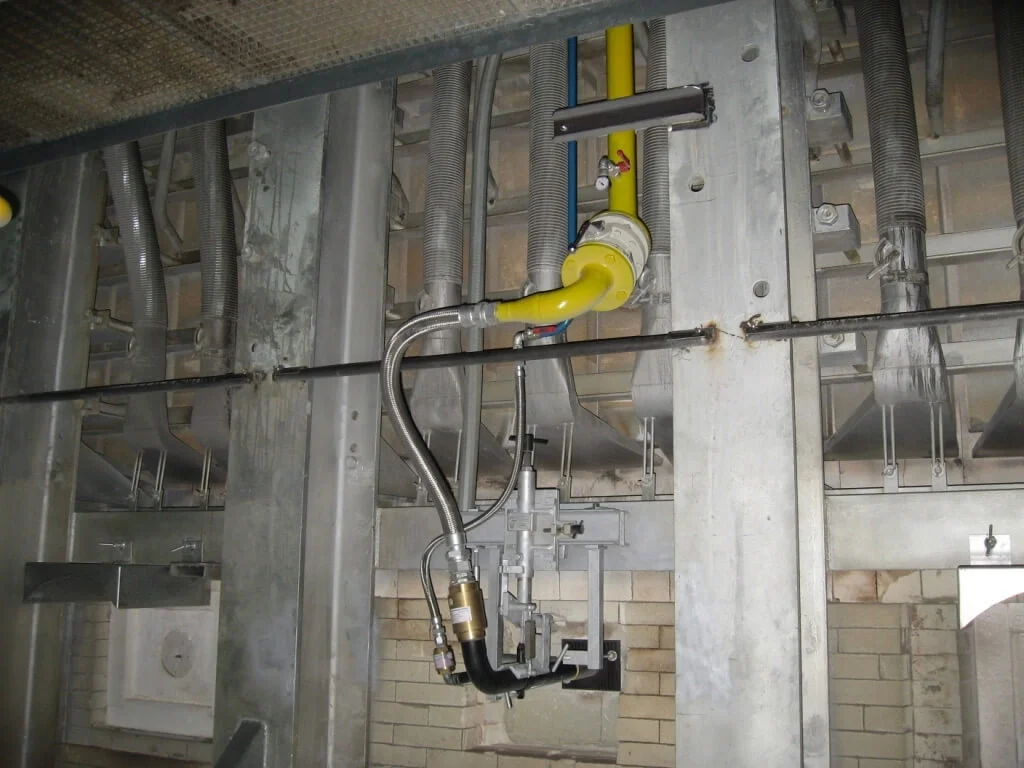
When installing the SPF system a more uniform temperature profile (lower temperatures at the start of the combustion and increased temperatures at the end) are achieved. by evening the temperatur in the furnace, hot spots are moving downstreams, increasing the refining temperature. By avoiding temperature peaks, the formation of thermal NOx is reduced. Local emisivity is increased by restricted soot formation. This soot is burned up until the entry of the exhaust gases into the regenerator, to prevent any damage to the chambers. Hotwork and UAS specialised in supply of auxiliary equipment, including full gas control stations, furnace control system ( DCS ), full automation, exhaust gas analysis and Oxygen probes as well as tuning, supervision and commissioning services worldwide.

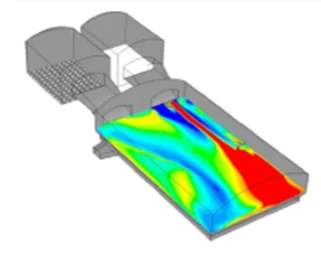
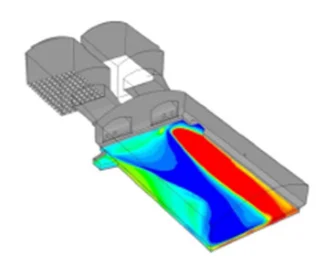
The image below shows that at the point at which the glass melt should reach the highest temperature (hot spot, refining zone) given the already reduced „flame“ temperature (for NOx reduction), the direct energy input of the flame is very low. To bring more energy into the glass tank at this point, it is necessary to raise the crown temperature or the direct input of energy by changing the flame control. An increase of the crown temperature is not a solution, as the refractory material limit temperature would be exceeded and the lifetime of the furnace would be endangered. With the SPF the temperature can be increased at this point, increasing the energy input and reducing NOx.
Second Phase Firing Image Two

Figure 1 Temperature distribution at the level of the secondary gas injection.

Second Phase Firing Image Three

Figure 2 Temperature distribution 100mm above the glass bath

Second Phase Firing Image Four

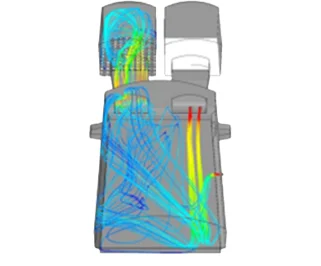
Figure 3 Stained path of the fuel lines with the velocity (flow characteristics)

Hotwork International AG

Romanshornerstrasse 123
9322 Egnach Switzerland
contact@hotwork.ag+41 71 649 20 90

Hotwork Group

  • Hotwork Holding AG
  • Hotwork International AG
  • Hotwork International Inc.
  • Hotwork - XiX Ltd
  • MPOT Hotwork Solution Ltd
  • IRSP Ltd
  • Hotwork Heat Treatment & Specialized Services Ltd.
  • Heat Up Latin America S. DE R.L. DE C.V
  • PT Hotwork International Indonesia
  • Heat Applications India Ltd.
  • Heat Applications Global Ltd.
  • Total Project Management Ltd.
  • Hotwork International South America S.A.,
  • Hotwork International Co. Ltd. (Thailand)
Company Logo  Footer

Copyright © 2025 Hotwork International AG  |

This website uses cookies to ensure you get the best experience on it. By using this website, you agree to the cookies terms.

Read more.Dismiss